Rise Olympus Free Demo Review: A Beginner’s Guide to Gameplay, Bonuses, and Hidden Details
Trying a new online slot game is easier when you can explore its features before deciding whether it suits your preferences. That is one reason the Rise Olympus free demo attracts attention from players interested in mythology-themed games. With its dramatic Greek gods, cascading symbols, and interactive bonus mechanics, the game offers several elements worth understanding before getting started.
Rather than focusing only on potential prizes, this review looks at the actual experience of exploring rise of olympus. From learning the interface to understanding its special features, there is plenty to discover without immediately committing money. Visitors to jogoriseolympus.club can also explore information about the game and its different versions to build a clearer picture of what makes the title distinctive.
Why the Rise Olympus Free Demo Deserves a Closer Look
A demo is more than a way to pass the time. It provides an opportunity to understand a game’s structure, observe its animations, and become familiar with the rules without placing real-money bets.
Rise Olympus uses a grid-based layout that may feel different from traditional slot games. New players can use the demo, where available, to see how symbols interact and how winning combinations trigger subsequent events. Instead of having every round end after the first result, the cascading mechanic can allow new symbols to fall into the grid and create additional combinations.
This makes the demo particularly useful for understanding the pace of the game. Players can observe how one spin develops, how the board changes, and how different symbols contribute to qualifying combinations.
Another advantage is the ability to explore the interface at a comfortable pace. Beginners can locate the paytable, review the available instructions, and learn what the various symbols represent before deciding whether they enjoy the experience.
The important distinction is that demo credits are virtual. They cannot be withdrawn as cash, and demo results do not predict what will happen during real-money play.
A Different Kind of Slot Experience
The visual identity of Rise Olympus draws heavily on Greek mythology. Zeus, Poseidon, and Hades provide the central characters, while temples, divine powers, and mythological symbols establish the atmosphere.
However, the theme is only one part of the experience. The grid and cascading system are what give the gameplay its distinctive structure.
When a qualifying combination appears, the matching symbols disappear and other symbols fall into the available spaces. If another qualifying combination forms, the process can continue within the same round.
This mechanic creates a changing board rather than a fixed sequence of spinning reels. It also means that individual rounds can unfold differently, with some ending quickly and others producing multiple cascades.
For newcomers, the best approach is to spend time learning the rules rather than trying to predict outcomes. A cascade may create another opportunity for a winning combination, but it does not guarantee one.
Exploring the Hand of God Feature
One of the more distinctive aspects of Rise Olympus is the Hand of God feature, which connects the gameplay with the powers of the mythological characters.
The gods can influence the grid through special effects, depending on the game’s rules and the version being played. These interactions may affect symbols or create additional opportunities for combinations.
For someone exploring the demo, the feature is worth observing because it illustrates how the mythology theme connects directly with the mechanics. Instead of serving only as decorative characters, the gods are incorporated into the way the game develops.
Players should review the relevant instructions to understand what triggers these effects and how they influence a round. The exact behavior can depend on the specific game version.
Wrath of Olympus: Understanding the Bonus Round
Wrath of Olympus adds another layer to the game’s feature system. It is associated with a progression mechanic in which qualifying activity can contribute toward a special event.
When the applicable requirements are met, the feature can activate a bonus round involving the gods’ abilities. This introduces a different phase of gameplay and gives players another mechanic to explore.
The demo can help explain the relationship between the progression meter and the bonus feature, provided the relevant event occurs during the session. There is no guarantee that a bonus round will appear within a particular number of spins.
Understanding this distinction is important. A progression meter should not be treated as a promise of a reward, nor should players increase their spending in an attempt to force a bonus to activate.
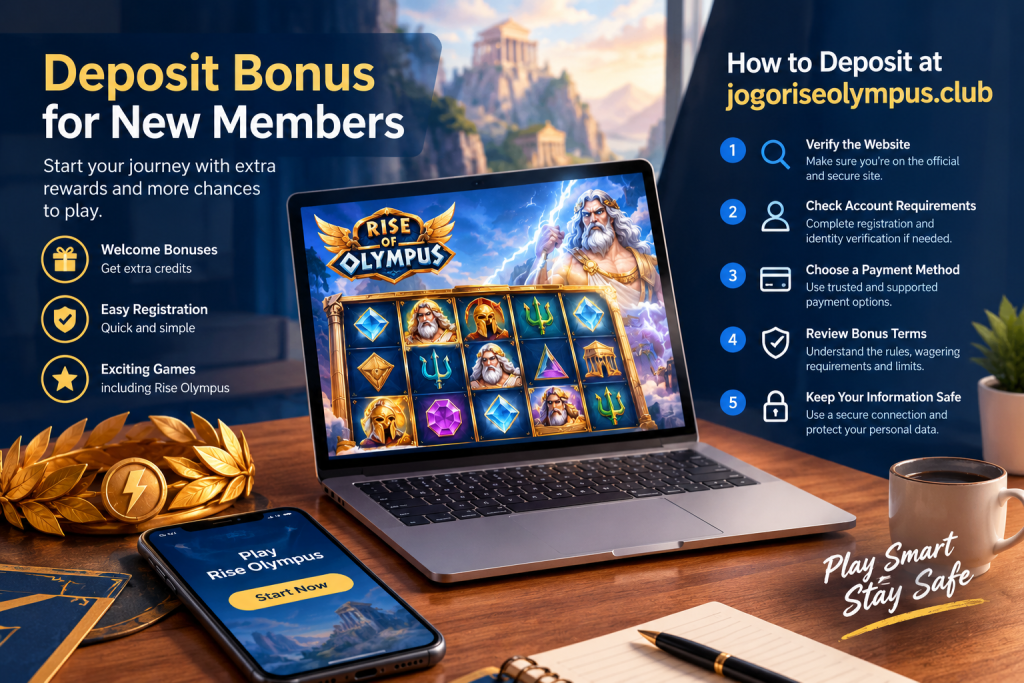
Deposit Bonus for New Members: What Should You Know?
For players exploring online gaming platforms, a deposit bonus for new members may seem like an attractive way to get started. These promotions are generally designed to introduce eligible newcomers to a platform by offering additional bonus credits or other incentives when they make their first qualifying deposit.
However, not every website provides the same promotion, and the availability of a welcome bonus depends on the individual operator. Before accepting an offer associated with Rise Olympus, it is important to confirm whether the promotion is actually available, who provides it, and what conditions apply.
For anyone researching options through Rise Olympus, checking the terms of any external promotion is an important step. Verify the identity and licensing status of the operator, review its bonus policy, and make sure the offer is available in your jurisdiction before registering or depositing money.
A deposit bonus should be viewed as an optional promotional incentive rather than a guarantee of winnings. If the terms are unclear or the operator cannot be independently verified, it is safer not to proceed.
Is Rise Olympus Suitable for Beginners?
Rise Olympus may appeal to beginners who enjoy fantasy settings and are willing to spend time learning a game’s mechanics. Its mythology-inspired presentation provides a recognizable theme, while the cascading grid offers something different from conventional reel-based slots.
The number of special features can make the game more involved than a basic slot. For that reason, a free demo is a sensible starting point for people who want to understand the interface before making any decisions about real-money play.
The game may be less appealing to those who prefer minimal animations, simple rules, or a more traditional slot layout. Preferences vary, so trying an authorized demo is more useful than relying on promotional descriptions alone.
A good review should also acknowledge that the game involves chance. No strategy, bonus feature, or amount of practice can guarantee a winning outcome.
Maximum-win figures should be interpreted in the same way. They describe a specified game limit or potential outcome, not a typical result or a realistic expectation for every session.
Before playing, check the exact version’s paytable and rules. Different releases may have different features, payout structures, and conditions.
Explore Before You Decide
The most useful aspect of the Rise Olympus free demo is the opportunity to become familiar with the game before making a financial commitment. Players can explore the cascading grid, learn how the Hand of God feature works, and understand the role of Wrath of Olympus and Free Spins.
Its Greek mythology theme gives the game a distinctive identity, while the special mechanics provide additional details to discover. Whether those elements make it enjoyable ultimately depends on individual preferences.
For more information about the game, its mechanics, and related versions, rise of olympus can serve as an informational starting point. Before following external links, verify the destination and check that any real-money operator is appropriately licensed for your location.
The sensible way to approach Rise Olympus is to learn the rules, try an authorized demo when available, and treat the experience as entertainment rather than a source of income. Set firm limits if you choose to gamble, never use money needed for essential expenses, and remember that every real-money session carries financial risk.

 A Total Guide to Professional IT Services for Companies
 Recognizing the Realty Market: An Overview for New Investors